



Japanese Religion: The Ultimate Guide to Shinto and Buddhism
Visiting Japanese temples and shrines is a must-do activity when in Japan.
However, many visitors are confused about the differences between Shinto shrines and Buddhist temples.
This comprehensive guide will help you understand Japanese religions and how to pay respects properly at religious sites.
⛩️Understanding Shinto and Buddhism
Shinto and Buddhism have coexisted harmoniously for centuries in Japan, each contributing unique characteristics to Japanese spiritual life.
Shinto, meaning "the way of the gods," is Japan's indigenous religion focusing on the w. Itp of natural worshipping ancestors. It celebrates life through various rituals and festivals, and Shintoatural cycles are celebrated through various rituals. There is a sacred text.
The religion centres on kami (deities) within nature, emphasizing purification and harmony with the natural world.
On the other hand, Buddhism arrived in Japan around 552 CE from India via China and Korea.
It has since evolved into various schools and sects, each offering unique approaches to achieving enlightenment.
Japanese Buddhism emphasizes meditation practices, funeral rites, and memorial services while incorporating elements of local traditions.
The religion focuses on the path to enlightenment, understanding the cycle of rebirth, and following the Four Noble Truths and the Eightfold Path.
Distinguishing Temples and Shrines
The architectural features of Shinto shrines and Buddhist temples reflect their distinct religious traditions.
Shinto shrines are marked by their iconic torii gates, which serve as symbolic entrances to sacred spaces.
These shrines typically feature a simple, natural design with elements such as chōzuya (purification fountains), Shimenawa (sacred ropes), and stone guardian dogs (Komainu).
You'll often find wooden plaques (Ema) where visitors write their wishes and paper streamers (Shide) decorating sacred areas.
Buddhist temples, known as otera in Japanese, present a different architectural style.
They feature prominent temple gates (sanmon), often accompanied by pagodas and a main hall (hondo).
Buddhist temples typically include cemeteries and incense burners, with buildings decorated with lotus motifs. Inside, you'll find Buddha statues, memorial tablets, and areas for incense offerings. A bell tower is another distinctive feature of Buddhist temples.
Proper Etiquette and Prayer Customs
When visiting a Shinto shrine, the prayer ritual begins at the torii gate with a slight bow.
Visitors then proceed to the chōzuya for purification, where they rinse their hands and mouths in a specific order. After placing a monetary offering, the main worshippers perform two deep bows, followed by two claps, a prayer with their hands together, and a final bow.
Buddhist temple etiquette differs notably. Upon entering through the temple gate, visitors may purify themselves with incense if available.
After placing an offering in the main hall, one simply joins hands in the gassho (prayer position), bows slightly, and offers a silent prayer.
Unlike at Shinto shrines, there is no clapping involved in Buddhist prayer rituals.
How to Pay Respect Step-by-Step Guide:
At Shinto Shrines
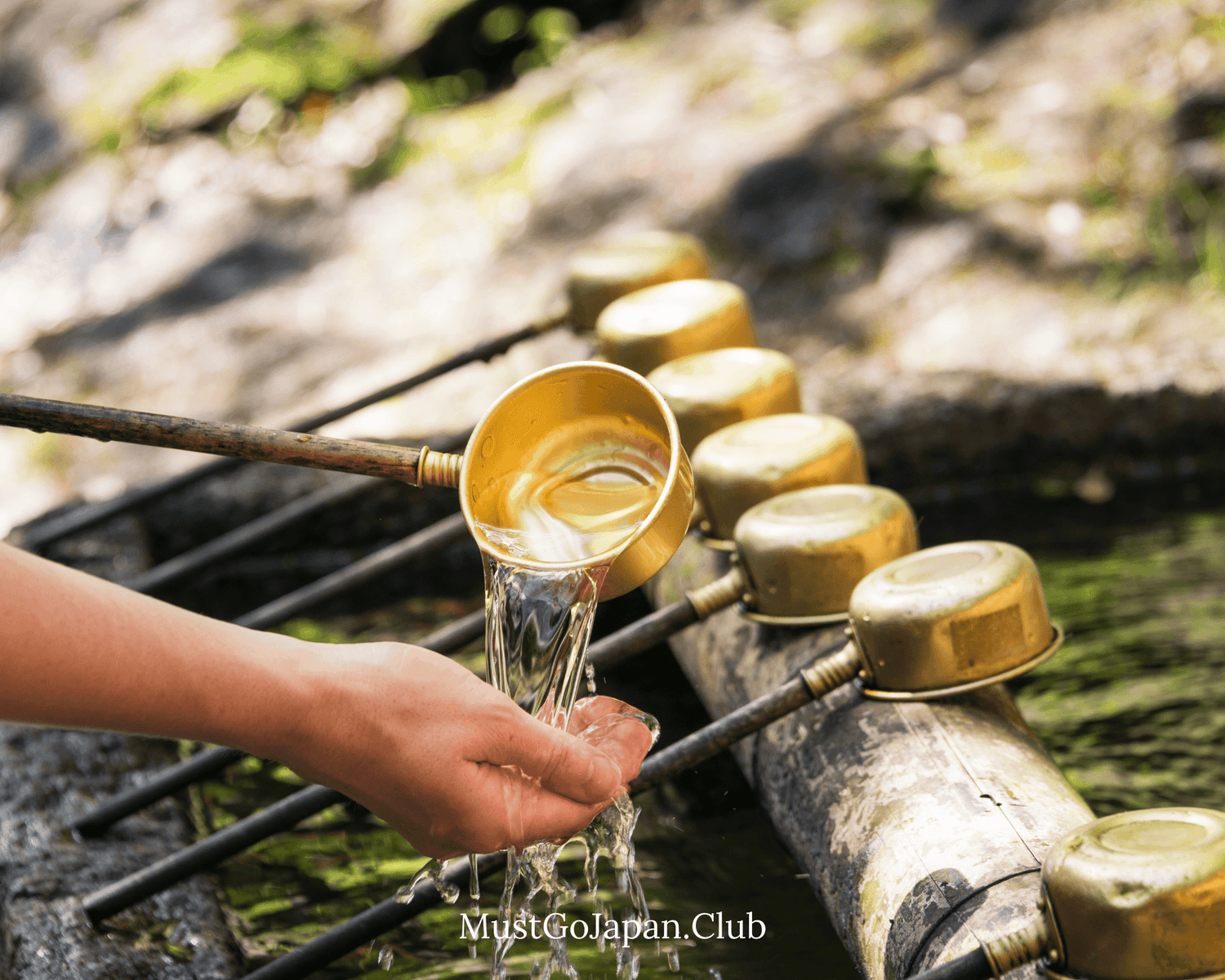
Chōzuya(手水舎)
1. Bow at Torii gate
2. Purify hands and mouth at chōzuya: Left hand first, Right hand second 3. Rinse mouth with left hand, Rinse left hand again
At the main hall
1. Throw a coin into the offering box 2. Bow twice deeply 3. Clap twice 4. Prayer with hands together 5. Final bow
At Buddhist Temples
1. Enter through the temple gate
2. Purify yourself with incense if available
3. At the main hall: Place offering (coin) 4. Join hands in Gassho 5. Bow slightly 6. Silent prayer No clapping
How much should I throw a coin
In Japanese culture, the amount of money offered at shrines and temples often carries special meaning through wordplay.
The Japanese word for "relationship" or "connection" is "en" (縁), which sounds similar to the word for "yen" (円).
This creates meaningful combinations when offering money. Here's what different amounts symbolize:
Common Offering Amounts and Their Meanings
Small Offerings (5-50 yen)
5 yen: "go-en" → Represents good connections/relationships
11 yen: "ii-en" → Good relationships
15 yen: "juu-bun na go-en" → Sufficient relationships
20 yen: "ni-juu no en" → Double the relationships
25 yen: "ni-juu no go-en" → Double the good relationships
35 yen: "sai-san no go-en" → Repeated good relationships
41 yen: "shi-juu ii-en" → Consistently good relationships
45 yen: "shi-juu go-en" → Consistent relationships
50 yen: "go-juu no en" → Five-fold relationships
Medium Offerings (100-500 yen)
100 yen: "hyaku no en" → Hundred relationships
105 yen: "juu-bun na go-en" → Plenty of good relationships
115 yen: "ii go-en" → Excellent relationships
125 yen: "juu-ni-bun ni go-en" → More than enough relationships
415 yen: "yo-i go-en" → Good relationships
485 yen: "shi-hap-pou kara go-en" → Relationships from all directions
Lucky Number Offerings
111 yen: "ichi-ban" → Number one in everything
123 yen: "up-going numbers" → Rising fortune
777 yen: "lucky seven" → Good fortune
2,525 yen: "ni-ko-ni-ko" → Smiling (sounds like the Japanese word for smile)
Special Purpose Offerings
2,951 yen: "fuku-koi" → Inviting happiness
4,129 yen: "yo-i fuku" → Good fortune
8,981 yen: "yaku-barai" → Warding off bad luck
9,674 yen: "ku-ro nashi" → No hardship
Large Offerings
10,000 yen: "ban-ji en-man" → Everything is perfect (using new bills)
Special Note
Odd amounts that can't be divided evenly are believed to bring harmony to marriage and family life, as they symbolize the impossibility of splitting up.
Seasonal Observances and Special Customs
Japanese religious practices are deeply connected to the changing seasons.
The New Year period (Shōgatsu) is particularly significant, with millions participating in Hatsumode, the first shrine or temple visit of the year, to pray for the year.
During this time, people acquire new lucky charms (Omamori) and draw fortune papers (Omikuji).
Other important observances include Setsubun in February, marking the beginning of spring, and Obon in August when ancestors' spirits are believed to return home.
Modern Practice and Cultural Significance
In contemporary Japan, religious practices often transcend strict doctrinal boundaries.
Many Japanese people participate in both Shinto and Buddhist rituals throughout their lives, choosing different aspects of each tradition for different occasions.
Shinto ceremonies typically mark joyous occasions like weddings and children's blessings, while Buddhist rites are more commonly associated with funeral and memorial services.
Conclusion
Understanding the differences between Shinto and Buddhism enhances your Japanese temple and shrine visits.
While the customs may seem complex, remember that genuine respect and careful observation are most important.
For centuries, both religions have coexisted harmoniously in Japan, creating a unique spiritual landscape that welcomes visitors from all backgrounds.
Have you read my Japan Guidebook?
If not, download it from here
it will help you understand Japan:)
LATEST POST
Let's explore hidden gems in Japan💎✨

@MustGoJapan.Club 2024